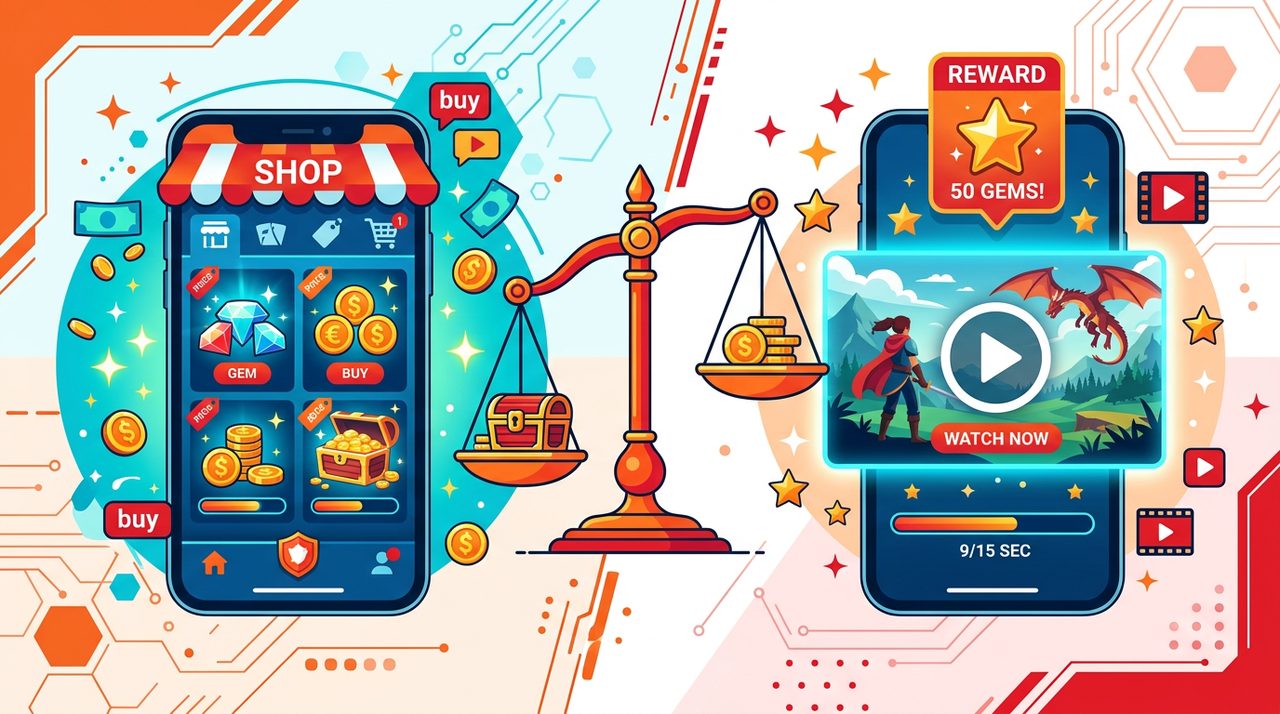
Two games can sell the identical item and earn wildly different revenue, purely because of how they price and present it. Pricing is psychology as much as economics — and small framing changes can move revenue by double digits.
Anchoring sets the reference
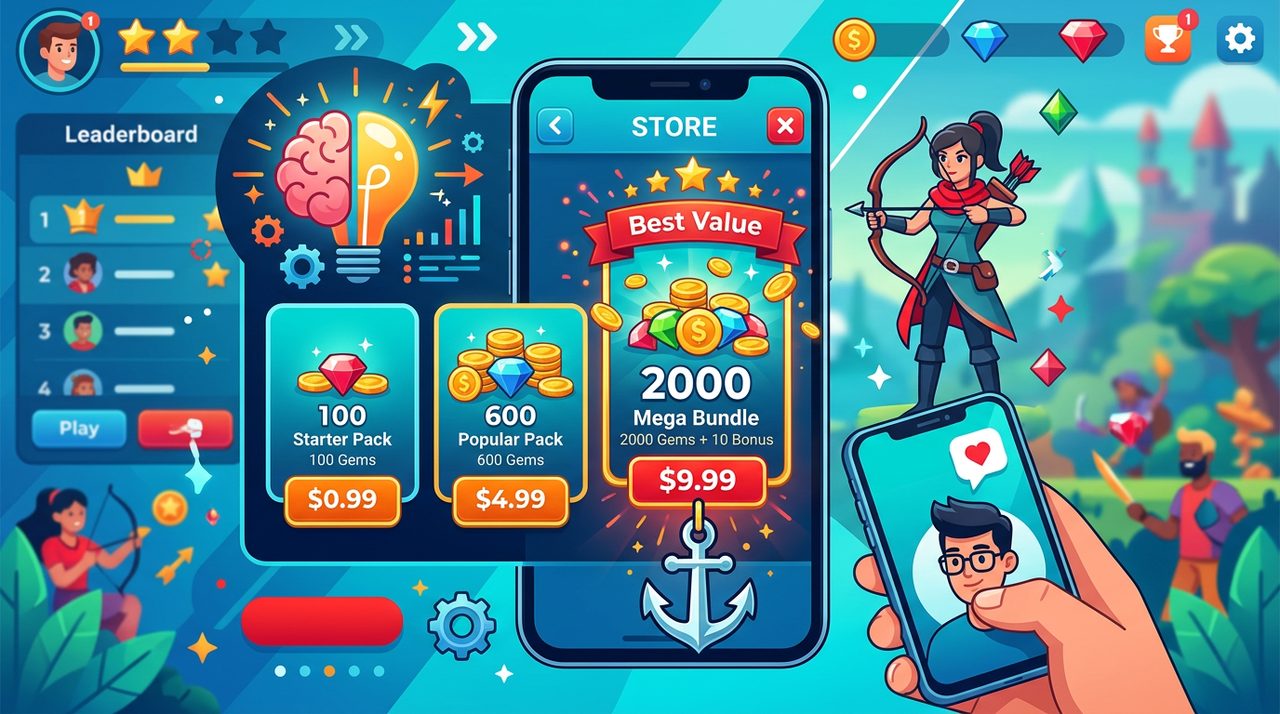
People judge prices relative to whatever they see first. Show a $99.99 bundle at the top of your store and every cheaper pack suddenly looks like a bargain. The expensive anchor rarely sells in volume, but it reframes the entire menu in your favor.
The decoy effect
Add a slightly-worse, similarly-priced option next to your target offer and the target becomes the obvious choice. A $4.99 "small" pack next to a $5.99 "popular" pack that gives triple the currency makes the popular pack feel irresistible. The decoy exists only to make another option shine.
Charm pricing still works
$9.99 reliably outperforms $10.00, even though the difference is a cent. The left digit dominates perception. It feels small, but across millions of transactions, charm pricing meaningfully lifts conversion.
Build a clear price ladder
Offer a logical progression of price points — say $1.99, $4.99, $9.99, $19.99, $49.99 — each with proportionally better value as you climb. This lets every player, from the cautious to the committed, find a tier that fits, and nudges them gently upward.
You are not selling currency. You are selling the feeling of getting a great deal.
Localize prices properly
A price that converts in the US may be out of reach elsewhere. Localized pricing — adjusting tiers to local purchasing power, not just converting currency — can multiply revenue in emerging markets. Never use a single global price and assume it travels.
First-purchase offers
The hardest conversion is the first one. A one-time, deeply-discounted starter bundle ("80% off, new players only") breaks the seal. Once a player has paid once, the psychological barrier to paying again drops sharply — making that first offer one of your most valuable tools.
Treat your store as a designed experience. The numbers you choose, and how you arrange them, are as important as the items themselves.