Behind every high-grossing game is a carefully balanced virtual economy. Get it right and players feel a steady, satisfying pull to spend. Get it wrong and you either give away too much (no revenue) or squeeze too hard (no retention).
Soft currency vs. hard currency
Most games use two currencies. Soft currency (coins, gold) is earned through play and used for routine upgrades. Hard currency (gems, diamonds) is rare, often premium, and used for the most desirable items. Separating the two lets you reward free players generously while reserving real spending power for hard currency.
Sinks and sources
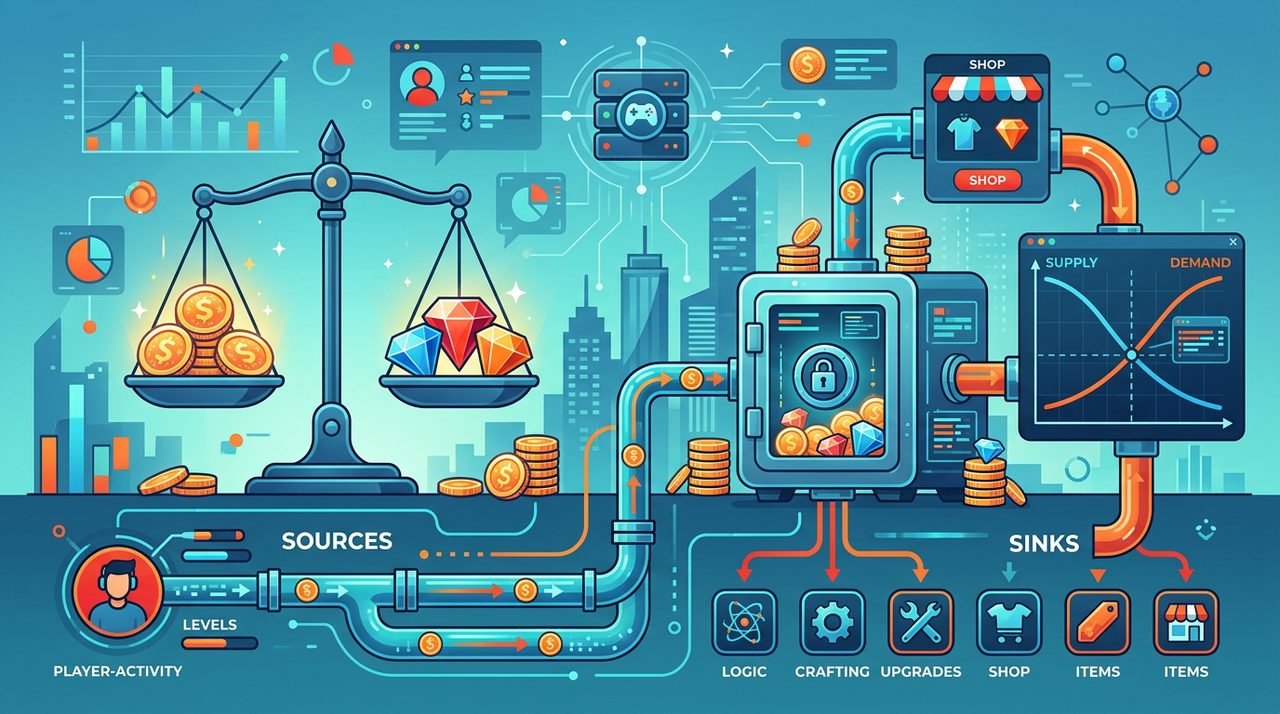
An economy is a balance of sources (where currency enters) and sinks (where it leaves). Too many sources and the economy inflates, making purchases pointless. Too many sinks and players feel starved. Healthy economies keep players slightly short of what they want — a gentle, persistent gap that purchases close.
Good economy design is the art of keeping players one upgrade away from satisfaction.
Pacing the progression curve
Early game should feel generous — players need quick wins to get hooked. As they progress, costs rise and earning slows, creating natural pressure points where an IAP feels like a smart, optional accelerator rather than a wall.
Anchoring and bundles
Price perception is relative. A $99 mega-bundle makes a $9.99 pack look reasonable — even if few buy the big one, it reframes the others as good value. Offer a clear ladder of price points, and always highlight the "best value" tier to guide the choice.
Test, observe, rebalance
No economy launches perfectly tuned. Track currency balances, sink usage, and conversion at each price point, then rebalance through live updates. A virtual economy is a living system — treat it like a central bank treats a real one: with constant, careful adjustment.
Master sinks, sources, and pacing, and your IAP revenue stops being luck and becomes design.